Quicksilver runs fixed-price, fixed-scope diagnostics that model the real operating reality behind a major decision, investment, transformation, or transaction — so you commit with evidence, not assumption.
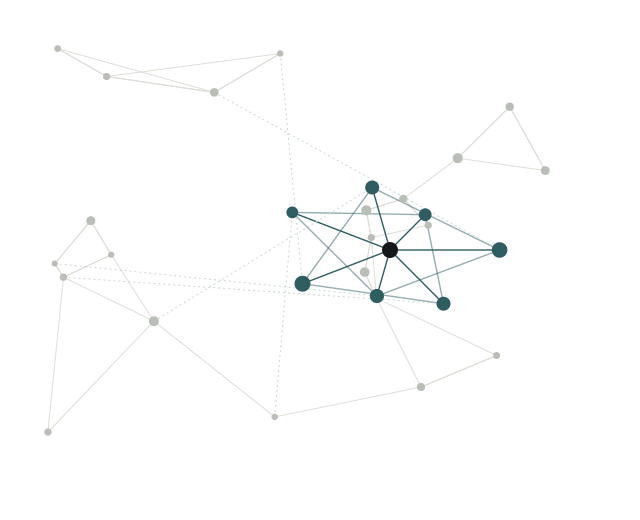
They fail because the relevant information is scattered across teams, systems, plans, and assumptions that no single person can see in full.
Strategy explains why to act. Finance estimates the cost. Technology assesses feasibility. Operations raises practical concerns. Each perspective is reasonable on its own. Considered as a whole, the decision often isn’t — and the gap only becomes visible after the organization has committed.
Start with one consequential decision, change, or question — not a full organizational review.
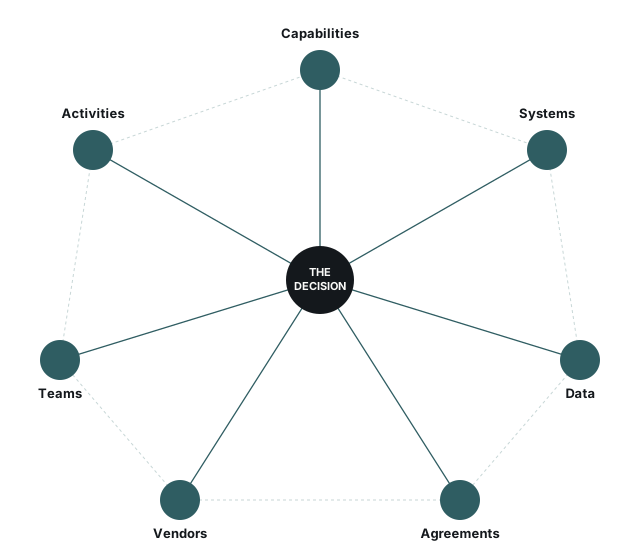
Connect the capabilities, teams, systems, data, vendors, and agreements it actually depends on.
Gather evidence and test the proposed direction against operating reality, not intention.
Leave you with findings, a roadmap, and a living model you keep building on.

Is this AI use case supported by organizational reality?
Read more Featured
What hidden dependencies could affect the transaction, separation, integration, or post-close plan?
Read more Featured
Can this roadmap item actually be delivered by the organization as it exists today?
Read more
What will actually be affected if this change proceeds?
Read more
Do we understand and govern the information crossing our organizational boundaries?
Read more
What is this specific organizational problem actually made of?
Read moreEvery diagnostic is bounded and quoted before it starts. No open-ended discovery, no scope creep.
Findings are traced to your actual operating reality — not summarized from interviews and impressions alone.
Every engagement leaves you with a living model you continue to use and extend long after the diagnostic ends.
Quicksilver was an invaluable partner for our project. When they came on board eight months into a twelve-month project that had seen little progress, they were able to quickly assess the situation and develop a plan to recover it. Their expertise in agile practices was essential to this recovery, and the future-state architecture they developed put us in a position to outcompete our rivals.Tom Murphy, CTO
Diagnostics are our lead offer and where the model does its clearest work — but the same connected view underpins strategy and roadmapping, embedded leadership support, hands-on execution, and standalone mapping and modelling engagements.
See All ServicesFrom technical due diligence on a MedTech acquisition to rebuilding a public-sector justice system's data architecture — a look at how this approach plays out in practice.
View Case StudiesLet's find out what's actually true first. When a diagnostic points to build work, our sister company, Quicksilver Software Development (QSD), can carry it through implementation.