
Every Quicksilver diagnostic tests a real decision against the same thing: a connected model of how your organization actually operates — the Organizational Coherence Model.
We map the entities and concepts your organization runs on — capabilities, business activities, teams, systems, data, vendors, and agreements — into a connected graph.
Instead of treating each of these as a separate workstream, the model shows how they depend on one another, so a proposed decision can be tested against how the organization actually works, not how it is described to work on a slide.
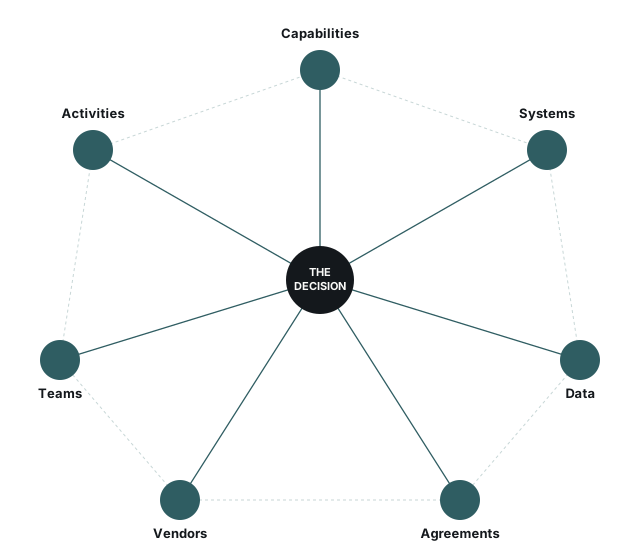
A conventional review produces a set of findings. The Organizational Coherence Model produces a structure.
It shows where capabilities are well supported, where they quietly depend on people, systems, or agreements that were never built to carry them, and where the organization’s stated direction and its actual operating reality don’t agree.
The consequential decision, proposed change, or critical question.
The intended outcomes and the organizational capabilities required to reach them.
The business activities, teams, systems, processes, data products, storage, vendors, agreements, and external parties involved.
About the current state, directly from the organization — not just from plans and interviews.
Dependencies, constraints, missing capabilities, governance gaps, and areas of uncertainty.
The proposed direction against organizational reality.
Decision options, a recommendation, and a practical roadmap.
Retained as a living organizational asset you keep building on.
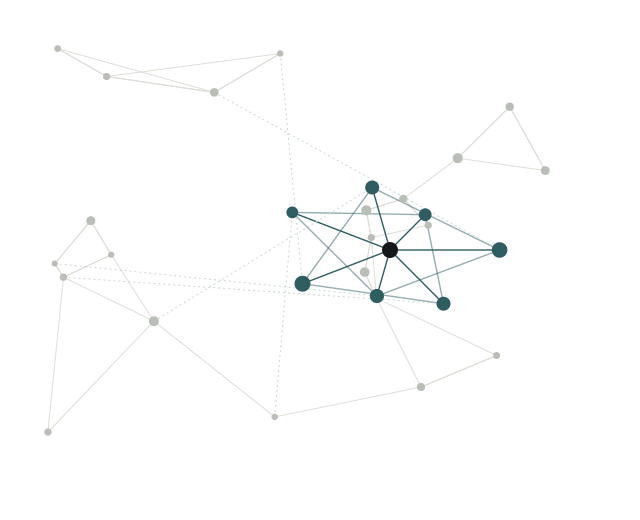
Most diagnostic work is set aside the moment the report is delivered. The Organizational Coherence Model isn’t.
It’s handed back to you as a living asset — one you can extend with the next decision, the next system change, the next transaction. Each new diagnostic adds to the same connected picture instead of starting again from zero.
See the DiagnosticsEvery diagnostic starts with one bounded question. Let's define yours.